Bargello Museum, Florence. What to see and tips for visiting
The Bargello Museum in Florence is one of my favorites. Housed in a magnificent 13th-century building, it has one of the most important sculpture collections in the world: masterpieces by Michelangelo, Donatello, Verrocchio, and many others. There are also many other gorgeous collections of applied arts (metalwork, ceramics, ivories, and more), so it would take days to see everything thoroughly!
This museum also has the advantage of always being uncrowded; there are rarely any lines to enter. It’s definitely quieter than the Uffizi or the Accademia Gallery. Those who choose to visit the Bargello Museum are usually art-loving travelers who have more time available than those who only visit the Uffizi and the Accademia.
Ciao! My name is Claudia, I am a licensed tour guide in Florence with over 10 years of experience. Learn more about me and my private guided tours in Florence.
In this post, you’ll find all my top tips for planning your visit to the Bargello Museum, the must-see works, and everything you need to know about it.
History of the Bargello in Florence
The Bargello was built starting in the mid-13th century as the palace of the Capitano del Popolo (Captain of the People) and then of the Podestà, two important political figures of the ancient Florentine Republic. Over the following years, it was expanded several times, reaching its current size at the end of the 14th century.
When the Medici became the Lords of Florence, in the 16th century, the Bargello Palace became the seat of the Bargello, the captain of the police, who carried out arrests, interrogations, and death sentences. During those years, the rooms were modified to house a prison, and it remained a prison for over three centuries.
In the mid-19th century, a small section of a fresco by Giotto was rediscovered in the Chapel of Mary Magdalene, the last one created by the medieval artist. That fresco was very famous because it contained the first portrait ever made of the great poet Dante. Thus, it was decided to relocate the prison, recover the lost fresco, and restore the entire palace, transforming it into Italy’s first national museum.

Bargello Museum in Florence: what not to miss
There are countless sculpture masterpieces, especially from the Renaissance, but not only. Below is a list of what I believe to be the must-see works of art at the Bargello. But first, remember that the first masterpiece you should enjoy is the palace’s architecture, especially the beautiful internal courtyard, with its ancient coats of arms carved in stone and the monumental staircase.
The Bargello is definitely one of the best museums in town. To learn more about all of them, how they work, and much more, read my full guide to the museums of Florence.
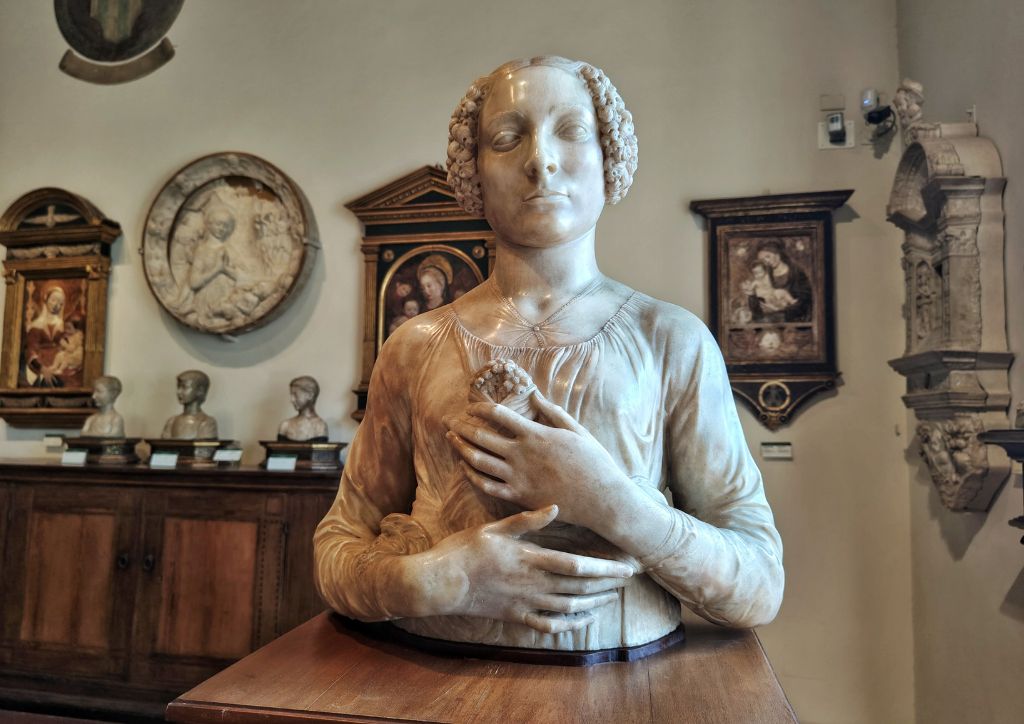
Dama con Mazzolino- Andrea Verrocchio
Dama con Mazzolino (Woman with Flowers) is a portrait bust that Andrea Verrocchio made around 1475. The name of the woman portrayed is unknown, although there are many theories. It’s certainly a beautiful portrait, very realistic in details such as the woman’s hands, the hair on her forehead, and the ruffles of her dress.
Verrocchio was one of the greatest sculptors and painters of the 15th century. He worked extensively for the Medici family and was one of Lorenzo the Magnificent’s favorite artists. He was also the master of a young Leonardo da Vinci. At the Uffizi Gallery there is the painting of the Baptism of Christ, created by Verrocchio together with a very young Leonardo: it’s the first painting ever by Leonardo da Vinci and one of the works not to be missed at the Uffizi Gallery.
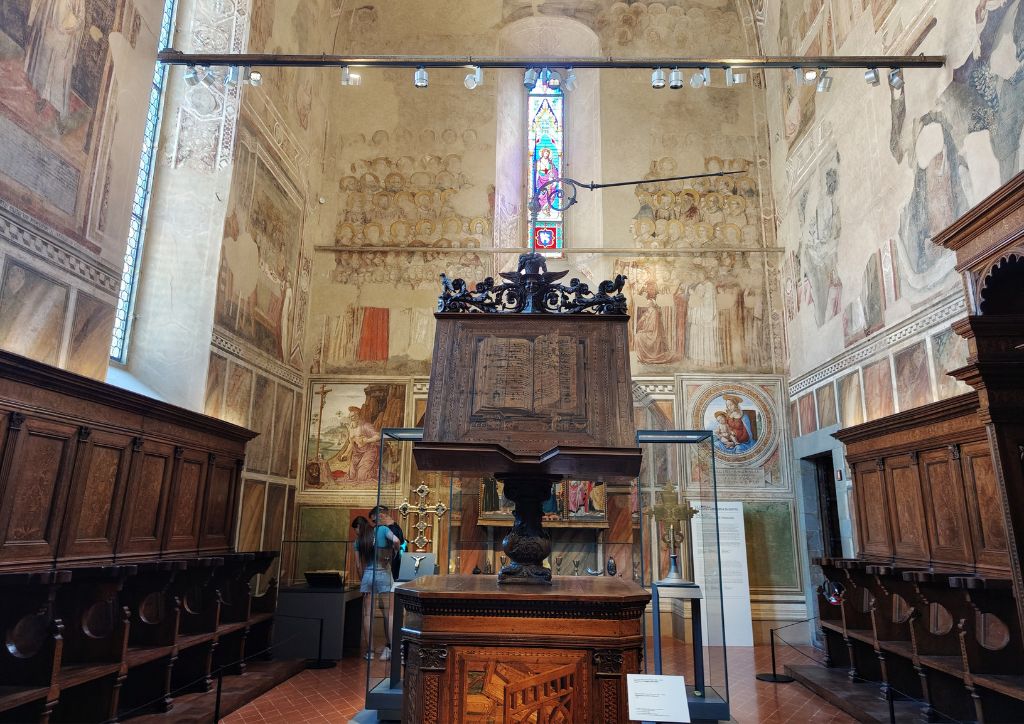
Chapel of Mary of Magdalene
This chapel was built around 1280 and frescoed by Giotto between 1330 and 1337. Those condemned to death would pause here for a final prayer before execution: the frescoes dedicated to Mary Magdalene provided an example of a redeemed sinner to the condemned, inviting them to repentance. When the palace was converted into a prison, the chapel was painted white and divided into two rooms, one of which was used as a pantry for the kitchen. It remained that way until 1840, when Giotto’s frescoes and the portrait of Dante were rediscovered and brought to light, removing the layer of white paint and the added walls.
The frescoes depict the Last Judgement on two walls, with representations of Heaven (Dante is there) and Hell. The other two walls are painted with scenes from the lives of Mary Magdalene and St. John the Baptist.
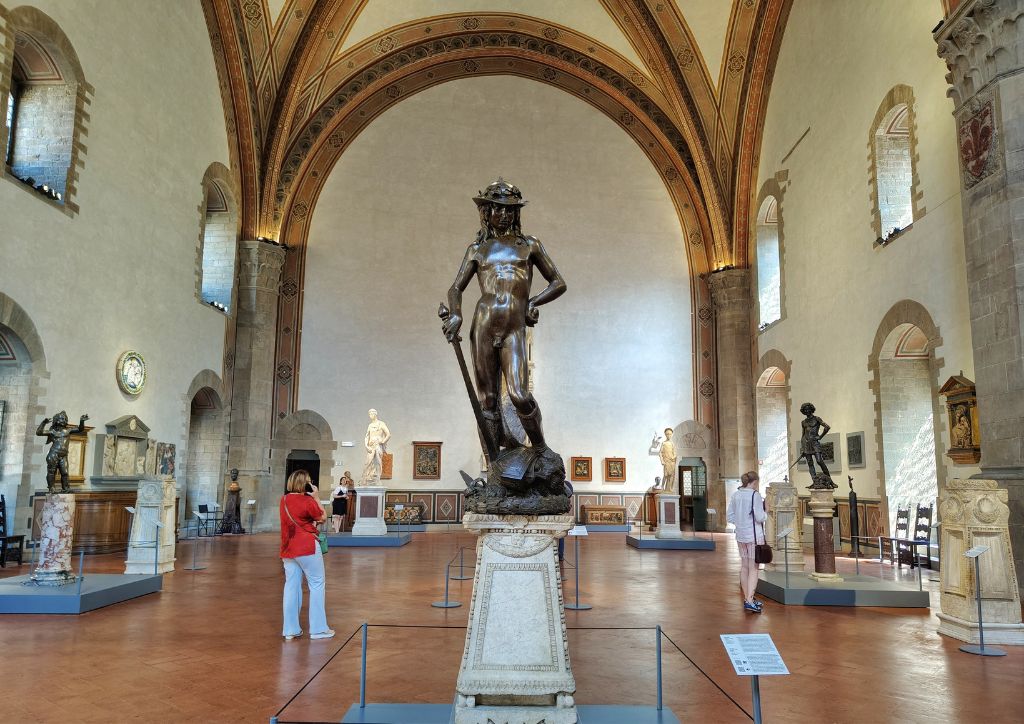
Artworks by Donatello at the Bargello museum
The next works of art are all located in the same room, the beautiful Donatello Hall. As you might imagine, that’s because there are so many works by Donatello! But not only that, there are also sculptures by Filippo Brunelleschi, Andrea del Verrocchio, and other Florentine artists.
Fun Fact: Did you know that there are three other David statues in Florence, in addition to Michelangelo’s super-famous one? Michelangelo’s is located at the Accademia Gallery Museum (read my tips for visiting the Accademia Gallery!), while the other three are all located at the Bargello Museum:
Marble David by Donatello
This large statue of David is an early work by Donatello, who in 1408, when he created it, was just 21 years old, but was already working for the Cathedral of Florence, which commissioned it. It was eventually purchased by the Republic of Florence and placed in the Palazzo Vecchio, because David is an important symbol of the Florentine Republic.
Bronze David by Donatello
This small but wonderful bronze statue is one of my favorite works by Donatello! It depicts a young, completely naked David, with a still immature and androgynous body, in a sensual pose. I love his subtle smile after slaying the fearsome giant Goliath. This statue was created by Donatello for the Medici family in 1440, and then, in 1495, when the Medici were expelled from Florence, the statue was stolen by the republicans and taken to the Palazzo Vecchio.
Saint George by Donatello
Donatello created this marble statue in 1415, when he was about 29 years old, and it was so well received that it made him incredibly famous. Saint George was the patron saint of the Guild of Armorers and Swordsmiths, who commissioned Donatello to decorate the exterior of the church of Orsanmichele. Because it was very exposed to the elements, in the mid-19th century it was decided to move it to the Bargello Museum and place a copy on the church’s exterior wall.
Cupid-Attis by Donatello
One of Donatello’s most enigmatic works of art, dating back to around 1440. The bronze statue has a double name because it’s still unclear who it represents: Cupid, the god of love, or Attis, the ambiguous and ancient deity who died and was resurrected? The statue depicts a plump, winged cherub, dressed in chaps that leave his genitals and bottom exposed, and sandals reminiscent of those of Mercury. The child is full of bizarre elements, such as the poppy bulb decorations and the snake at his feet… And that kid has a tail!
Bronze David by Vercocchio
Another small bronze David, another masterpiece by Andrea Verrocchio (I must admit Verrocchio is one of my favorite sculptors). It was created in 1475 for Lorenzo the Magnificent and his brother Giuliano, but the following year it was purchased by the Republic and also moved to the Palazzo Vecchio. Verrocchio’s David is a young, thin-bodied adolescent dressed as a page, with a bold and proud demeanor.

Bronze Panels by Ghiberti and Brunelleschi
These two bronze panels have an interesting story to tell. They were created in 1401 by the two finalists in the competition to create the bronze doors of the Baptistery of Florence: Lorenzo Ghiberti and Filippo Brunelleschi. The subject they were commissioned to depict was the Sacrifice of Isaac, and the two artists represented the same scene, each in their own way. The original bronze door of the Baptistery is preserved at the Opera del Duomo Museum.
These two panels are a cornerstone of art history; Brunelleschi’s, in particular, is considered the first Renaissance work of art ever.
Michelangelo at the Bargello museum in Florence
On the ground floor of the Bargello is the large Michelangelo Hall, which houses four important sculptures by this artist. Thea reason why I recommend to start from the top floor, is to end the visit with a bang! I have listed the four artworks by Michelangelo in chronological order:
Bacchus
This is one of Michelangelo’s earliest works, and one of the very few with a non-religious theme. He created this statue for Cardinal Riario when he was just 21 years old. The cardinal was very impressed by the young artist’s talent and commissioned an “statue in an antique style.” The result was this drunken, staggering, and sensual young Bacchus, with a very intense expression. At his feet is a small faun eating a bunch of grapes. The statue was later rejected by the cardinal and purchased by other private individuals, until it ended up in the hands of the Medici family in the 17th century.
Tondo Pitti
Michelangelo sculpted this marble bas-relief for the Pitti family around 1503, while simultaneously working on David. The scene depicts the seated Virgin Mary holding her child, with an infant Saint John the Baptist in the background. The sculpture is made using Michelangelo’s typical unfinished technique, called non-finito.

David-Apollo
Created by Michelangelo in 1530, this statue has a double name because it’s still unclear who it represents. The figure is ambiguous and could represent either the mythological Apollo or the biblical figure of David. This work was also left unfinished by the artist.
Brutus
This bust of Brutus is one of Michelangelo’s most beautiful and least-known works. It was sculpted in 1538 for Donato Giannotti, an important politician of the Republic of Florence and an opponent of the Medici family. The year before, Lorenzaccio de’ Medici had assassinated Duke Alessandro de’ Medici, a hated tyrant, and Giannotti wanted to commemorate the event with a statue with strong political significance. Brutus, in fact, is seen positively as a tyrannicide. This statue, like the Tondo Pitti, was left intentionally unfinished by Michelangelo, in keeping with his philosophy of the non-finito.

Other recommended artworks to see at Bargello
The Bargello Museum is best known for the Renaissance sculptures I’ve mentioned so far, but there’s much more. It’s a large museum and is packed with diverse collections that will capture your attention. These collections are the result of private donations or come from the vast collections of the Medici Grand Dukes.
Here are some of the other artworks to see at the Bargello Museum, mostly according to my own personal taste.
Bust portrait of Costanza Bonarelli by Gian Lorenzo Bernini
Bernini worked primarily in Rome, and very few of his works are preserved in Florence. One of these is the bust portrait of Costanza Bonarelli, the great artist’s lover. Bernini created the sculpture for himself around 1636, and it’s one of the very few times he didn’t work for important figures such as cardinals and popes.
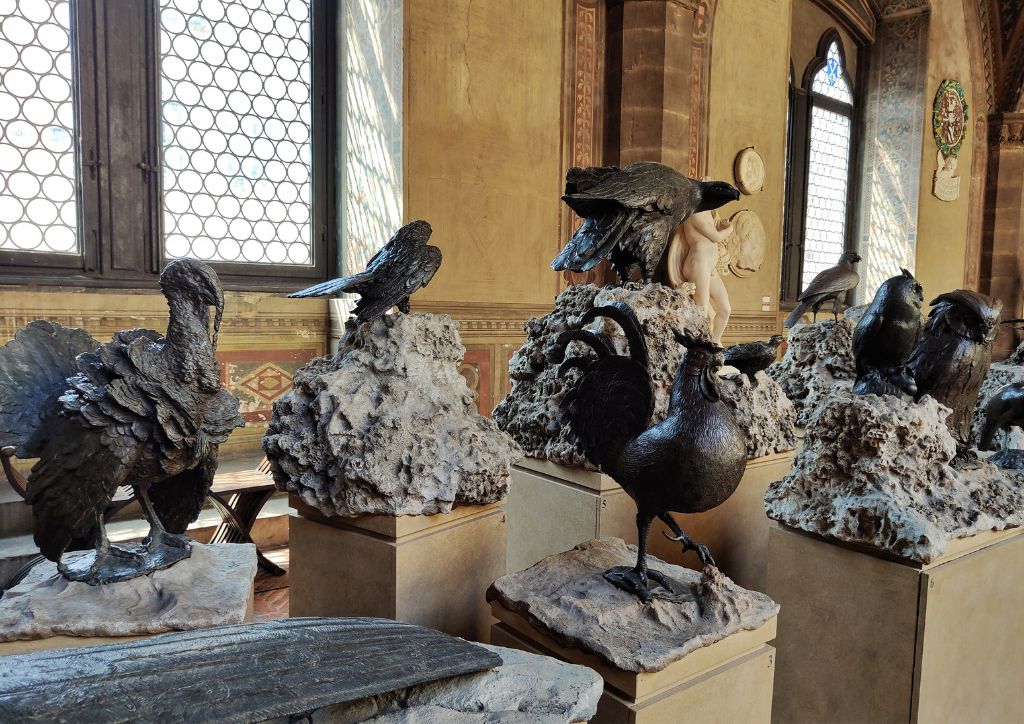
Bronze Birds by Giambologna
A series of extremely lifelike bronze statues depicting birds, created by Giambologna in the late 1500s. There’s a beautiful turkey, which was considered an exotic bird at the time, as well as owls, eagles, hawks, and much more. I love birds, so those are among my favorite works of art at the Bargello!
Carrand Collections
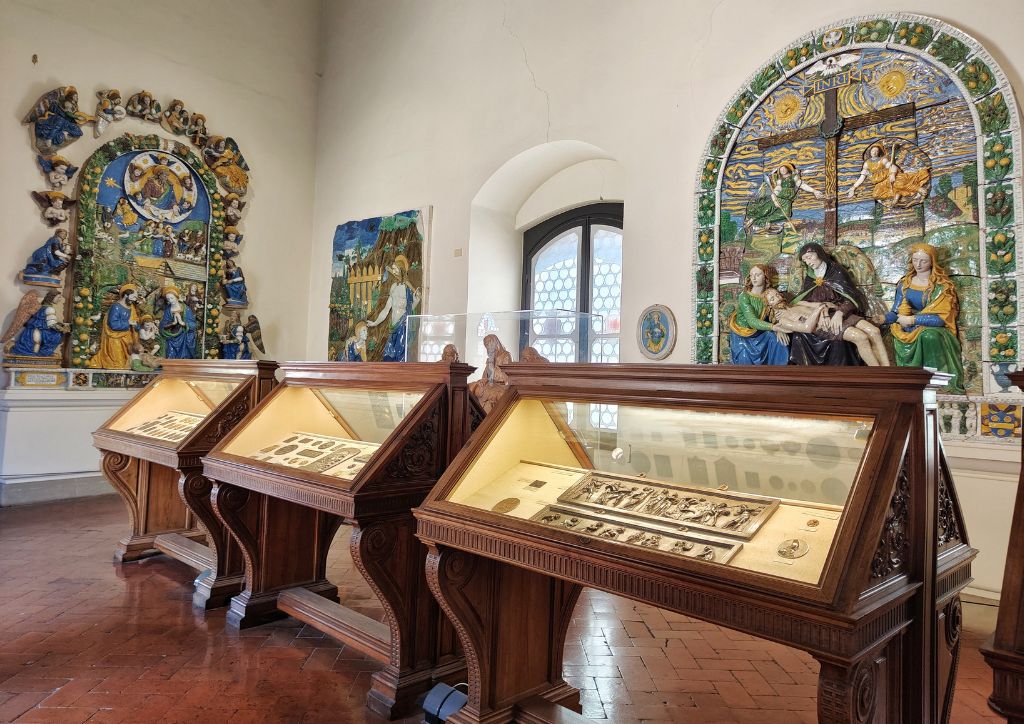
Jean-Baptiste Carrand and his son Louis were two cultured, wealthy, and generous French art enthusiasts who, in the 19th century, amassed extraordinary and highly diverse collections. The Carrand collections primarily include works of the minor and applied arts from all over Europe. The father primarily collected ivory artifacts, while the son favored ceramics, enamels, and metalwork. These are extraordinary objects, demonstrating the skill of medieval artisans in creating everyday objects of incredible beauty.
Also, not to be missed at the Bargello Museum:
- Many other artworks attributed to Donatello
- Dozens of tin-glazed terracottas by Luca and Andrea della Robbia
- The Hall of Islamic Art
- The Hall of Medieval Sculpture
Tips for visiting the Bargello Museum in Florence
Here is all the practical information for organizing your visit to the Bargello Museum, and my best tips as a local tour guide.
One of the reasons I love visiting the Bargello Museum is that it’s always so quiet. Forget the crowds of the Uffizi and Accademia Gallery, and the anxiety of booking tickets months before. There are rarely lines to enter, and if there are, they last only a few minutes. For this reason, it’s not necessary to book your ticket in advance. If you want to plan everything in advance and be safe, you can still book tickets on the official website. Otherwise, this is one of the few museums where you can decide when to visit at the last minute and buy your ticket at the ticket counter.
The museum is quite large, and the artworks are displayed on three floors (there are elevators). I would recommend starting from the top floor and working down. The Donatello Hall is on the first floor, while the Michelangelo Hall is on the ground floor.

Opening hours and days:
The Bargello Museum is open every day except Tuesdays, from 8:15 am to 6:50 pm.
On Sundays, it closes at 1:50 pm.
Bargello Ticket price
The price of the ticket for Bargello is 10 euros for adults. Entrance is free for kids under 18, and reduced to 2 euros for EU citizens under 25.
If you book the ticket online, there’s an extra booking fee to be paid (4 euros).
There is a combo ticket that covers 5 museums, and lasts 3 days (72 hours). The museums included are:
- Bargello Museum
- Palazzo Davanzati Museum
- Orsanmichele Church and Museum
- Medici Chapels
- Casa Martelli Museum
Free entrance on the first Sunday of the month
Every first Sunday of the month, admission to many national museums is free, and the Bargello is one of them. I advise against visiting the museum on the first Sunday of the month, because it’s actually the only day of the month when the Bargello is incredibly crowded and there are long lines to get in. The free ticket isn’t worth the waste of time and the inconvenience of missing out on the artworks due to crowds.
Guided tours of the Bargello, Florence
A guided tour is a great way to learn more about the history of this fascinating building and its artworks.
- If you’d like a short guided group tour, I recommend this 1-hour guided group tour of the Bargello.
- If you’d like a more in-depth visit, the best option is a private tour with me. You’ll choose the length of the tour and decide how many and which artworks to explore.
Keep in mind that the group tour is cheaper only for groups of up to 3 people; for groups of 3-4 people or more, the private tour is still more affordable.
You can use the form below to contact me and receive more information about my private tour of the Bargello Museum in Florence.